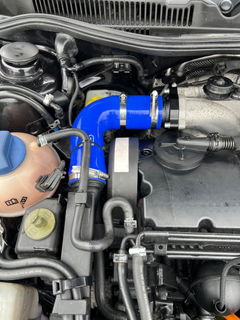
-


T Bolt Hose Clamp
Regular price From £1.09Sale price From £1.09 Regular priceUnit price per -


T Bolt Hose Clamp - 10 Pack
Regular price From £10.90Sale price From £10.90 Regular priceUnit price per -


T Bolt Hose Clamp - 100 Pack
Regular price From £109.00Sale price From £109.00 Regular priceUnit price per -


Assorted T-Bolt Hose Clamps
Regular price From £69.31Sale price From £69.31 Regular priceUnit price per


T-Bolt Hose Clamps
Hose clips and clamps are devices used to attach and secure a hose onto a fitting, such as a barb or nipple. They are typically made from metal, such as stainless steel or galvanized steel, and are designed to tightly grip the hose and fitting in order to prevent the hose from slipping off or leaking. Hose clips and clamps are used in a wide range of applications, including automotive, industrial, and domestic settings.
There are several different types of hose clips and clamps available, each with its own unique characteristics and uses. For example, worm drive hose clips are commonly used in automotive and industrial applications because they are easy to install and provide a strong, secure connection. These clips feature a screw-like design that tightens around the hose and fitting as the screw is turned, creating a tight seal. Another popular type of hose clip is the T-bolt clamp, which uses a bolt and nut system to clamp the hose onto a fitting. T-bolt clamps are often used in high-pressure applications because they can provide a very strong and secure connection.
In terms of technical characteristics, hose clips and clamps are typically rated for use at specific pressure and temperature ranges. For example, a hose clip may be rated for use at pressures up to 100 pounds per square inch (PSI) and temperatures up to 300 degrees Fahrenheit. It is important to choose the right type of hose clip or clamp for the specific application in order to ensure that the connection is secure and able to withstand the expected operating conditions.
Worm Drive Clip | T-Bolt Clamp | Mini Fuel Line Clip | Rubber Lined P-Clip | Hose Clip Driver
What is a T-bolt clamp?
When do I need one?
What sizes do you stock?
How do I size one?
Why does the smooth inner band matter?
How tight should it be?
Questions about T-Bolt Hose Clamps?
Need something bespoke?