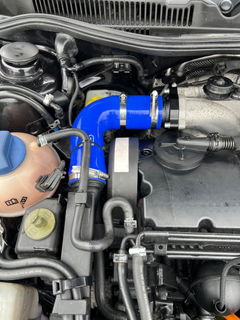
Silicone Fuel and Oil 90° Elbows

2 products


Silicone Fuel and Oil 90° Elbows

What is in the Fuel & Oil elbow range?

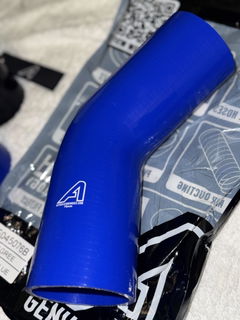
45 and 90 degree elbows in 6mm to 102mm with standard 150mm legs; 45 and 90 degree Long Leg elbows in 13mm to 76mm with 300mm legs and 600mm total; and 45 and 90 degree Classic Wrapped elbows in 13mm to 51mm. All are black, all are built to SAE J30 R6 with a fluorosilicone inner layer.

When should I choose the Long Leg version?

When you need genuine reach - the standard elbow gives 150mm each side, the Long Leg gives 300mm. That matters where the elbow has to span a gap between two components rather than simply turn a corner at a pipe stub, or where you want to trim to an exact length without ending up with too little hose for the clip.

What is the difference between the gloss and wrapped finishes?

Purely cosmetic. The standard elbows have the smooth gloss black finish of modern silicone hose. The Classic Wrapped elbows have a cloth-wrapped outer that reads as period rubber, which suits classic, vintage and restoration work where a glossy modern hose would look out of place. Both have a fluorosilicone liner underneath.

Why do I need a fluorolined elbow rather than a standard one?

Because standard silicone swells and breaks down in contact with petrol, diesel and oil. Any elbow carrying fuel, oil or fuel vapour - including breather and catch-can lines that carry oil mist - needs the fluorosilicone liner. Getting this wrong does not fail immediately; the hose degrades quietly from the inside over months.

What temperature and pressure will they take?

-60C to +180C, in 3 and 4 ply depending on diameter, with polyester braid reinforcement giving working pressures from around 12.33 bar on the smallest bores down to 2.8 bar on the largest. The Classic Wrapped versions are rated -60C to +180C with a +200C peak. Full tables are on each product page and in the datasheet.

How do I size one?

Order by internal diameter, matched to the outside diameter of the metal pipe or stub the elbow slides onto. Measure the pipe with vernier callipers rather than measuring the hose you are replacing, which will have stretched in service. If the two ends are different sizes you need a reducing elbow, not a plain one.