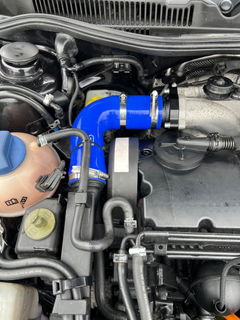
Skip to product information
1 of 15

Auto Silicone Hoses

Silicone Rubber Caps

Colour: Red

SEC032R-ASH

Regular price £3.46
Sale price £3.46 Regular price

Delivery/Collection

Delivery

Free Evri Standard delivery on all mainland UK orders over £40.

Next Working Day Delivery is a paid-for service.

  • Royal Mail Tracked 24Next working day
  • Evri ExpressNext working day
  • FedEx ExpressNext working day
  • Royal Mail Tracked 482-3 working days
  • Evri Standard2-3 working days

Delivery times are estimates and start from dispatch.

Bank holidays may affect our opening hours and delivery times.

Collect from Silicone Hose UK

Orders can be collected once you receive your ready-to-collect email.

Address

Silicone Hose UK

HolmeBank Business Park, Station Road
Unit 5
Mirfield WF14 8NA
United Kingdom

Get Directions

Opening hours

Monday 07:00 – 19:00
Tuesday 07:00 – 19:00
Wednesday 07:00 – 18:00
Thursday 07:00 – 18:00
Friday 07:00 – 17:00
Saturday 07:00 – 13:00
Sunday Closed

Bank holidays may affect our opening hours and delivery times.

Returns

It's OK to change your mind
Return within 30 days for a full refund*. Learn More

Silicone Unreinforced End Cap provides a clean, high‑integrity method to blank off pipe stubs, hose tails, and tube ends in automotive, industrial, and maintenance environments. Manufactured from smooth extruded silicone compound to SAE J20 R3, the silicone end cap resists extreme temperatures from -50°C to +220°C with short‑term peaks to +250°C, maintaining elasticity and seal reliability under thermal cycling. With a consistent 3.5 mm wall and a smooth internal bore, the cap presses on easily and grips securely, supporting applications such as vacuum line sealing, coolant system blanking, pneumatic circuit protection, and fluid transfer line isolation. Available across popular internal diameters from 4 mm to 38 mm with a typical insertable length of 30 mm (and a 60 mm overall length on the 20 mm size), the silicone blanking cap offers a versatile, reusable alternative to rigid plugs or taped closures. The inert, non‑reinforced silicone construction combines flexibility with durability, while the translucent finish assists visual checks where required. These features make the silicone end cap—also known as a silicone vacuum cap or silicone blanking cap—well suited to industrial applications that demand dependable sealing at elevated temperatures.

Key Features:

  • Material: Smooth extruded silicone compound (inner layer and outer layer), unreinforced.

  • Standard: Conforms to SAE J20 R3.

  • Temperature Range: -50°C to +220°C; peak +250°C.

  • Internal Diameter Range: 4 mm to 38 mm.

  • Wall Thickness: 3.5 mm (all listed sizes).

  • Insertable Length: 30 mm (typical).

  • Overall Length: 35 mm standard; 60 mm on 20 mm ID variant.

  • Weights: Size‑dependent (approx. 2 g to 22 g across the range).

Precision‑made from unreinforced silicone rubber, the cap’s smooth bore ensures uniform contact pressure and a reliable friction fit over tube ends and hose barbs, supporting airtight and liquid‑tight blanking. The constant 3.5 mm wall thickness balances flexibility with crush resistance, allowing quick push‑fit installation without tools and repeated removal for servicing. High‑temperature capability up to +220°C continuous (with short peaks to +250°C) sustains sealing performance adjacent to engines, ovens, and heated process lines, while low‑temperature elasticity down to -50°C maintains grip in cold rooms or outdoor environments. The non‑reinforced construction avoids fabric edges that can fray or wick fluids, making the cap suitable for temporary fluid transfer isolation, pneumatic systems, and general industrial applications where durability, resilience, and easy handling matter. Compliance with SAE J20 R3 underscores material stability and heat ageing resistance expected in automotive and plant maintenance settings. Across sizes from 4 mm to 38 mm ID, the silicone end cap accommodates common tube and hose dimensions, enabling standardised spares stocking and consistent fit across equipment.

Typical applications include blanking spare ports on intake manifolds and vacuum circuits, sealing coolant take‑offs during maintenance, capping compressed‑air lines, and protecting exposed pipe stubs during storage or transport. In manufacturing and workshop environments, the silicone vacuum cap serves as a reusable closure for pneumatic tools, instrumentation hookups, and industrial fluid handling setups, helping to prevent ingress of dust and debris. In agriculture and irrigation, the cap provides a quick method to isolate branches and service lines. For chemical handling at moderate conditions, the inert silicone composition offers a non‑corroding, flexible barrier. Overall, polyester‑free, silicone reinforced PVC alternatives are unnecessary here; the unreinforced silicone end cap offers clean, medium‑duty sealing performance wherever a neat, removable closure is required.

Specifications

Type
End Cap
Standard
SAEJ20R3
Wall Thickness
3.5mm
Insertable Length
30mm

Size Guide

Inside DiametermmOutside DiametermmOverall LengthmmWeightg
4 11 35 2
6 13 35 4
8 15 35 5
10 17 35 6
12 19 35 8
16 23 35 9
18 25 35 10
20 27 60 12
25 32 35 14
28 35 35 15
30 37 35 17
32 39 35 18
35 42 35 20
38 45 35 22

Measurements are nominal and may vary slightly.

How to measure ID

ID OD wall reinforcement plies ID = bore · OD = ID + (2 × wall)
1
Measure the pipe, not the old hose
Heat and age make a used hose swell and go out of round. Take your reading across the metal outlet the hose slides onto — that measurement is your ID.
2
Use vernier calipers
Set the outer jaws across the widest point of the pipe. A tape measure round a curve reads low by a millimetre or two — enough to buy the wrong size.
3
Take three readings, keep the largest
Rotate 60° between each. If they disagree the pipe is oval; size to the biggest figure so the hose still seals.
4
Round to the nearest listed bore
Silicone stretches slightly. If you land between sizes, go down to the smaller bore for a tight seal — never up.
Order by ID, always. Every hose on this site is listed by internal diameter. OD is given for clearance only — it changes with wall thickness and ply count, so it is never the ordering size. On reducers, quote both ends, largest first.

Construction

Material
Smooth extruded silicone compound (inner layer and outer layer), unreinforced
Conforms to SAE J20 R3.

Silicone Rubber Caps

✅ -50°C to +220°C ✅ SAEJ20R3 ✅ 35mm Long

What is it for?

Blanking off a pipe stub, hose tail or port you are not using - deleting a redundant takeoff after an engine swap, capping an unused water or vacuum port, or protecting open pipe ends during storage, transport, painting or blasting.

What size do I need?

Measure the outside diameter of the pipe stub you are blanking and choose the cap with the matching internal diameter. It should be a firm push fit that needs some effort, not a loose slide. Available in internal diameters from 4mm to 38mm, in blue, black and red.

Can I use it on a pressurised port?

This is the unreinforced version, best suited to low or zero pressure blanking. For a pressurised coolant or boost port use our reinforced blanking cap, which has polyester braid and a 5 to 12 bar working pressure rating - an unreinforced cap will balloon and blow off.

What temperature will it take?

-50C to +220C, built to SAE J20 R3. That covers coolant service and general engine bay temperatures comfortably.

Do I need a clip as well?

On a zero-pressure stub the interference fit is usually enough. On anything pressurised, always fit a clip - a stainless worm drive clip on coolant, a T-bolt on boost. Position it over the section of cap supported by the stub underneath, not out at the closed end.

Can I use it on a fuel or oil port?

No - this is standard silicone and will swell and degrade in contact with hydrocarbons. Blanking a fuel or oil port needs a fluorosilicone or nitrile cap, or a metal blanking plug. Tell us the port and what it carried and we will point you at something suitable.

Questions about this product?
Ask our team