Silikonplatten

Keine Produkte gefunden

Verwende weniger Filter oder entferne alle


Silikonplatten

Unsere Silikonplattenkollektion bietet vielseitige, leistungsstarke Lösungen, die sich ideal für Anwendungen in der Industrie, im Automobilbereich und im Haushalt eignen. Dank ihrer hervorragenden Temperaturbeständigkeit, Flexibilität und Haltbarkeit bieten diese Platten zuverlässige Leistung in anspruchsvollen Umgebungen. Sie eignen sich perfekt für die Herstellung von Dichtungen, Versiegelungen, Isolierungen und Schutzabdeckungen in Anwendungen, die Beständigkeit gegen extreme Temperaturen, Chemikalien und Witterungseinflüsse erfordern. Unsere Silikonplatten sind in verschiedenen Stärken erhältlich, ungiftig und für Anwendungen in Lebensmittelqualität geeignet, was sie zu einer vielseitigen Wahl für Branchen von der Automobilindustrie über die Lebensmittelverarbeitung bis hin zur Medizin und darüber hinaus macht.

What silicone hose do I need for my job?

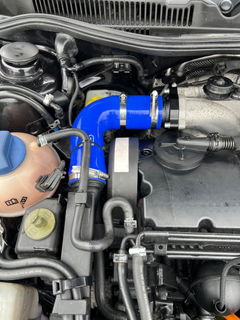
For a straight run, 1 metre straight hose or continuous coil. For a corner, a moulded elbow in 45, 90, 135 or 180 degrees. To join two stubs, a coupling hose. To change diameter, a straight reducer or a reducing elbow. Where vibration or misalignment is involved, a hump connector. For vacuum or tight bends, the wire reinforced SuperFlex. Tell us the application if you are unsure.

What is the difference between standard and Fuel & Oil silicone?

Standard silicone is built to SAE J20 R3 and is excellent with coolant, water and air - but it swells and breaks down in contact with petrol, diesel or oil. Fuel & Oil silicone has a fluorosilicone inner liner built to SAE J30 R6 and handles hydrocarbons including E5 and E10 pump fuel. If fuel or oil touches the inside of the hose, you need the Fuel & Oil version.

What temperature and pressure will standard silicone take?

Continuous service from -50C to +250C, with working pressure from around 12.33 bar on the smallest bores down to about 2.8 bar on the largest, and burst pressures up to 37 bar. That is a very large margin over what a car cooling system asks - typically 1 to 1.5 bar and well under 120C - which is why silicone hose so comfortably outlasts the rubber it replaces.

Why choose silicone over rubber?

Silicone does not perish, harden or crack with age, heat cycling or ozone exposure, so it does not have the service life that rubber does. It handles far higher temperatures, stays flexible in the cold, and comes in colours. The trade-offs are cost and the fact that standard silicone is not fuel or oil compatible. For a hose in an awkward position, silicone is worth paying for once.

What sizes and colours do you stock?

Straight hose from 6mm to 152mm, elbows from 6mm to 102mm, couplers from 13mm to 152mm, reducers in 61 straight and 43 elbow size pairings. Standard silicone comes in blue, black and red; Fuel & Oil and wrapped hose are black only. If you are building a full system, order it all together so the colour matches across batches.

How many plies do I need?

Ply count is matched to bore and duty - our hose is 3 or 4 ply across most of the range, with 2 ply on the smaller heater hose sizes where flexibility matters more than pressure. You do not normally need to specify it: each product is built with the appropriate reinforcement for its size. If you have an unusual pressure requirement, tell us and we will confirm.