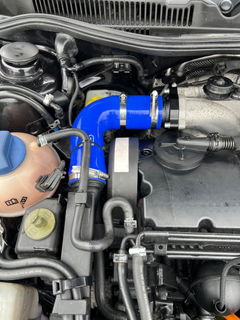
Gummi-Kraftstoff- und Ölschläuche

6 Produkte


Gummi-Kraftstoff- und Ölschläuche

Unsere Gummischläuche für Kraftstoff und Öl werden aus hochwertigen Gummimaterialien hergestellt. Sie sind so konzipiert, dass sie den härtesten Bedingungen standhalten und optimale Leistung in industriellen Anwendungen gewährleisten. Unsere Schläuche sind abrieb- und witterungsbeständig sowie korrosionsbeständig und eignen sich vielseitig für den Einsatz in der Automobil-, Schifffahrts-, Landwirtschafts- und Industriebranche. Von extremen Temperaturen bis hin zu unterschiedlichen Drücken bleiben diese Schläuche flexibel und funktional und erfüllen die Industriestandards für Sicherheit und leckagefreien Betrieb. Unsere Gummischläuche für Kraftstoff und Öl sind einfach zu installieren und zu warten und bieten eine nahtlose Lösung für Profis und Hobby-Enthusiasten. Sie bieten eine konstante Flüssigkeitstransportkapazität in einem breiten Spektrum von Betriebsumgebungen. Vertrauen Sie auf die Widerstandsfähigkeit unserer Kollektion, die Ihren anspruchsvollen Anforderungen an die Flüssigkeitshandhabung mit beispielloser Qualität und Haltbarkeit gerecht wird.

Which fuel hose do I actually need?

It depends on the job. For a general fuel or oil line, the Multi-Purpose Fuel & Oil hose covers 5mm to 25mm and is anti-static and very flexible. For small-bore carburettor and injector return lines, the Cotton Braided hose runs 3mm to 12mm. For a fuel filler neck, use the Ultraflex filler hose in 38mm, 51mm or 57mm. For a boat, you need the ISO 7840 marine hose. For high-pressure or exposed engine bay runs, the stainless overbraid hose. Tell us the application and we will confirm.

Are your fuel hoses compatible with E5 and E10 petrol?

Yes - the nitrile-based hoses in this range are formulated for modern ethanol-blended fuels as well as diesel and oils. This matters more than people expect: ethanol attacks unsuitable rubber from the inside, so an old fuel line can look perfectly sound externally while it is breaking down internally and shedding debris into the fuel system.

What does anti-static mean and when do I need it?

Fuel flowing through a hose generates static electricity. An anti-static hose has a conductive path that allows that charge to dissipate rather than build up and discharge as a spark. It matters most on higher-flow transfer applications and anywhere fuel is being decanted or pumped in quantity. Our Multi-Purpose Fuel & Oil hose is anti-static for exactly this reason.

What is a filler neck hose and why is it different?

The filler neck is the large-bore hose between the filler cap and the tank. It is a much larger diameter than a fuel line - ours are 38mm, 51mm and 57mm - and it has a steel wire helix in the wall so it will not collapse or kink as it curves round the bodywork. Our Ultraflex filler hose uses an NBR inner tube with a chloroprene outer for fuel resistance and weathering.

Can I use unreinforced fuel hose on a pressurised system?

No. The unreinforced hose is a smooth extruded nitrile tube with no braid, intended for low-pressure gravity feeds, breathers and transfer work in 3mm to 10mm bores. Anything on a pressurised injection system needs a reinforced hose - use the braided, multi-purpose or stainless overbraid options. If you are unsure whether your line is pressurised, assume it is and use reinforced.

What standards are these hoses made to?

Most are SAE J30 R6, which is the standard automotive fuel and oil hose specification. The marine hose is ISO 7840 A1, the fire-tested grade required on boats. The cotton braided hose is DIN 73379 Type B, and the unreinforced hose is BS EN ISO 11424:2007. Buying to a recognised standard is worth doing with fuel hose - it is not the place to economise.