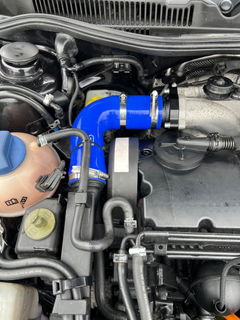
Mit Gummidraht verstärkter Kühlmittelschlauch

1 Produkt


Mit Gummidraht verstärkter Kühlmittelschlauch

Sehr flexibler und robuster, spiraldrahtverstärkter und textilumflochtener Kühlergummischlauch, der auf die gewünschte Länge zugeschnitten werden kann. Glatte Innenwand. Kühlerschlauch aus EPDM-Gummi mit glatter Innenwand, verstärkt durch eine Stahldrahtspirale und Textilgeflecht. Die Außenhülle ist frost- und ozonbeständig und hat eine gewellte Form, die dem Schlauch große Flexibilität verleiht. Der Schlauch kann bei Temperaturen von 100 °C und zeitweise bis zu 125 °C eingesetzt werden, wodurch er für Fahrzeugkühler und andere Heißwasseranwendungen geeignet ist.

Ein flexibler Kühlmittelschlauch aus Gummi für Kühler ist ein flexibler Schlauch, der zum Transport von Kühlmittel zwischen Motor und Kühler in einem Fahrzeug verwendet wird. Diese Schläuche bestehen normalerweise aus Gummi oder einem gummiähnlichen Material und sind so flexibel, dass sie sich leicht in den engen Räumen vieler Motorräume verlegen und installieren lassen. Neben ihrer Flexibilität sind Gummi-Kühlerschläuche auch hitze-, chemikalien- und abriebbeständig, sodass sie sich gut für den Einsatz in Automobilanwendungen eignen.

What is wire reinforced rubber hose for?

It is a heavy-duty suction and delivery hose - the steel wire helix embedded in the wall stops it collapsing under negative pressure or crushing under load. That makes it suitable for both sides of a pump, for coolant runs that have to turn tight corners without kinking, and for demanding industrial, agricultural and commercial fluid handling where an unsupported hose would flatten.

How is it constructed?

A smooth rubber inner tube for efficient flow, two plies of fabric cord for pressure strength, a high-tensile steel wire spiral embedded in the wall for crush and vacuum resistance, and a smooth rubber outer cover that is antifreeze and ozone resistant. It is built to SAE J20 R3, so it is rated for coolant service as well as general fluid transfer.

What sizes and lengths do you supply?

Internal diameters from 13mm to 51mm, cut to order from 1 metre up to a 20 metre full coil. Order by internal diameter to match the outside diameter of the pipe stub or spigot it will slide over. Buying a full coil works out better per metre if you have several connections to make or a long run to plumb.

When should I use wire reinforced hose instead of ordinary radiator hose?

Whenever the hose has to resist vacuum or crushing. Typical cases are a long lower radiator hose that can collapse as the pump pulls against it, any run on the suction side of a pump, a hose that has to bend tightly without kinking, and hoses in plant and machinery where something may lean or rest against them. For a short, well-supported pressure-side hose, standard reinforced rubber is fine and cheaper.

How do I cut it to length?

Cut the rubber between the wire coils with a sharp blade, then cut through the wire itself with side cutters, and tape or file the exposed wire end so it cannot work its way through the wall or catch on anything. Leave a clean square end and enough straight hose beyond the last coil for the clip to seat on properly.

Will the clip seal properly over the wire helix?

Yes, provided you position it correctly. Site the clip over the section of hose that is fully supported by the pipe stub underneath, and nip it up firmly without crushing the helix flat. If the clip lands directly on top of a wire coil it can deform the wall and create a leak path - move it a few millimetres either way so it bears on the rubber between coils.